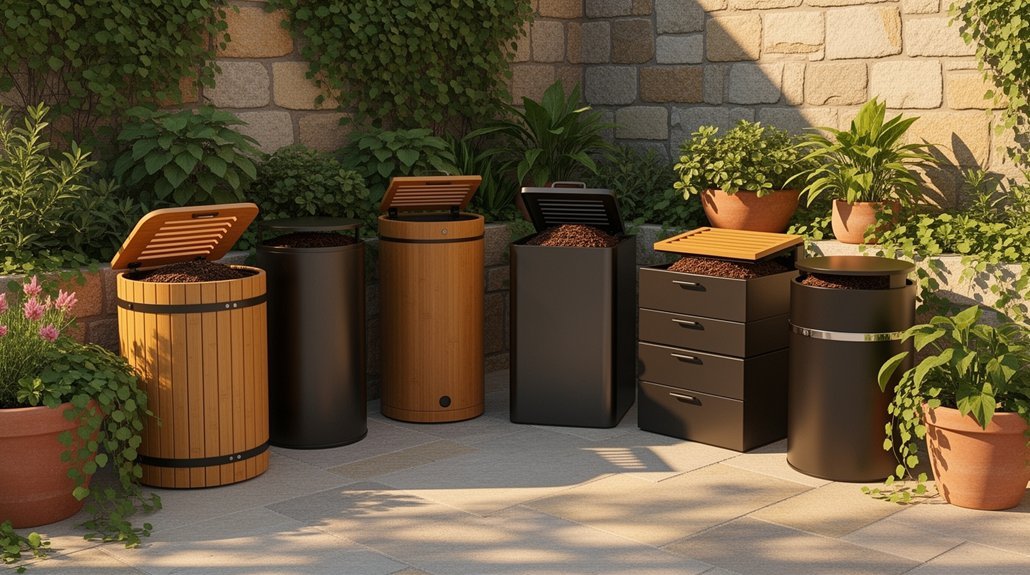
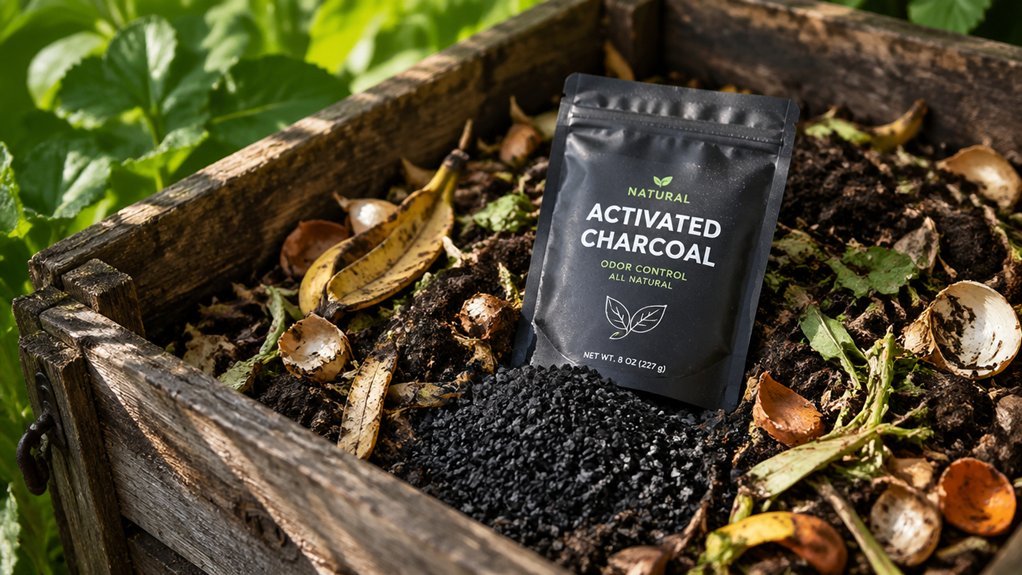
You can stop kitchen compost odors instantly by filling the bin’s filter compartment with granular activated‑charcoal pellets. The tiny pores adsorb ammonia, hydrogen sulfide and VOCs, so the gases never escape and the air stays fresh. Use loose pellets that keep airflow steady and avoid briquettes that could leach chemicals. Replace the filter every 2–3 months or when the scent fades, and you’ll keep the compost odor‑free while learning more about optimal setup.
Why Activated Charcoal Stops Compost Smells
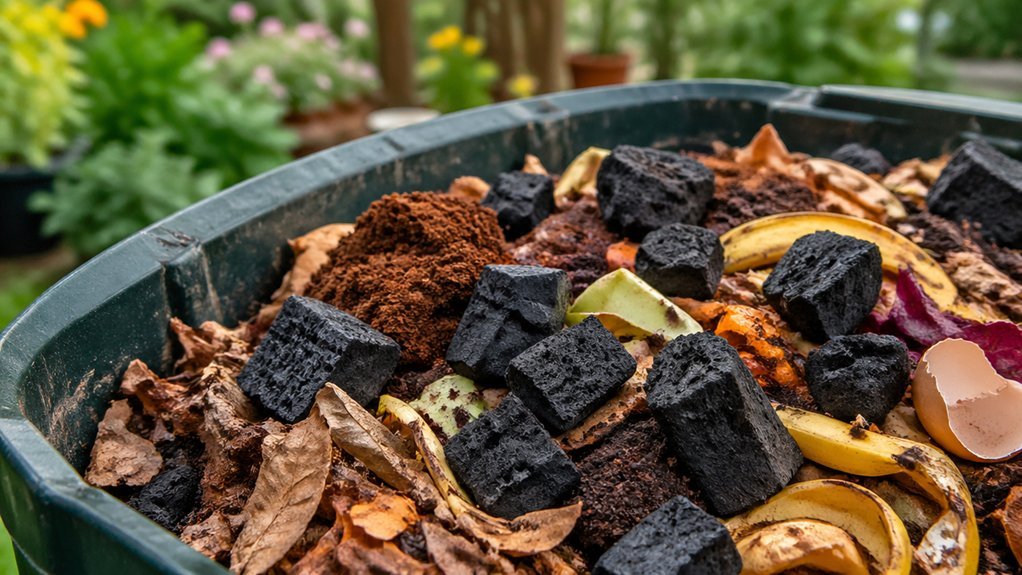
Ever wonder why a simple carbon filter can silence a stinky compost bin? You’re seeing activated carbon work its magic through odor adsorption. Its millions of microscopic pores trap ammonia, hydrogen sulfide, and VOCs before they drift out, acting as a barrier rather than a fragrance mask. High‑quality, thermally activated carbon offers a huge surface area, so each molecule sticks to the surface, removing the source of the smell. Because the pores fill over time, you’ll need to replace the charcoal every two to three months—or sooner if the bin starts re‑releasing odors or airflow drops. This true removal of volatile compounds keeps indoor air fresh and eliminates the lingering stench completely. Regular replacement with a charcoal filter helps maintain consistent odor control and extends the lifespan of your compost bin’s odor barriers.
Selecting the Best Activated Charcoal Form for Kitchen Bins
What form of activated charcoal will give your kitchen compost bin the strongest, longest‑lasting odor control? Choose granular activated carbon in pellet form. The tiny, uniform grains stay loose in the filter backing, letting air flow freely while constantly contacting the odor‑causing gases. Compared with sheets or pads, pellets won’t shift or clump, so you maintain consistent adsorption of VOCs, ammonia, and sulfur compounds. High‑quality activated carbon offers a massive surface area, so it captures more molecules before you need a replacement. Avoid briquettes or charcoal treated with lighter fluids, as they can leach unwanted chemicals into your compost. Swapping the pellets every two to three months, or sooner if you notice a scent return or airflow slows, maximizes odor control with minimal effort. Filter design considerations also influence fit and performance, so choose pellet forms that align with your bin’s lid and filter housing.
Installing PurifyLogix 1.55 lb Oversized Filter Refills
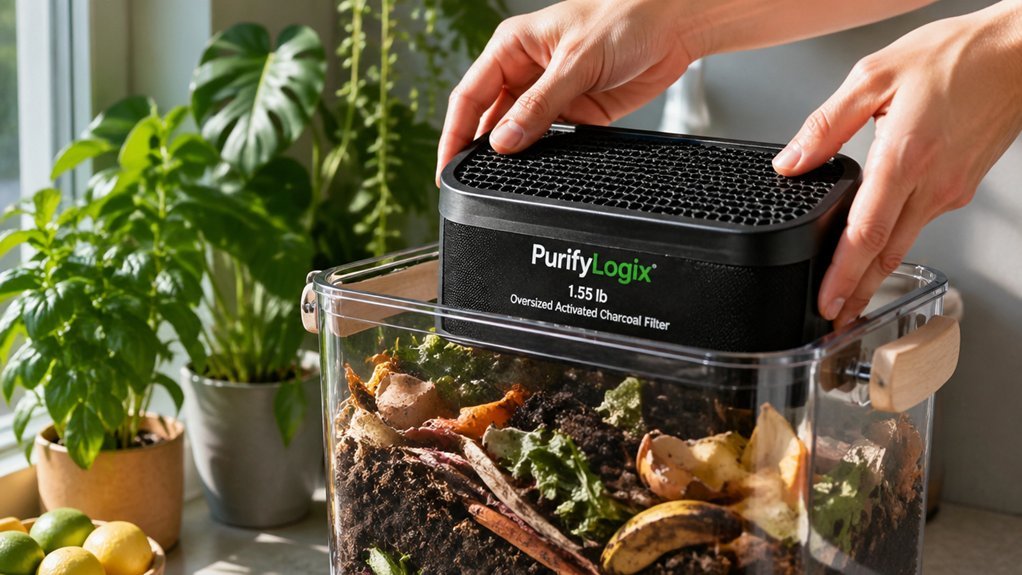
How do you get the most out of your Smart Waste Kitchen Composter? First, unplug the unit and locate the oversized back filter compartment. Tear open the PurifyLogix bag, then pour the granular activated charcoal into the filter housing until it’s full. Snap the filter cover back on and secure it. Plug the composter in; the charcoal will immediately begin adsorbing odor‑causing molecules, delivering reliable odor control for up to three months. Because the refill contains no microbial pods or powders, you avoid contaminating your compost or garden. The porous carbon structure traps VOCs, ammonia, and sulfur compounds, keeping your kitchen smelling fresh while maintaining an eco‑friendly composting cycle. Proper maintenance, including periodic filter replacements every 4–6 months, helps sustain odor control and prolongs the life of your unit filter maintenance.
Maintaining Optimal Performance – When to Replace the Filter
When the once‑fresh scent fades and you notice a faint, lingering odor, it’s a clear sign that your activated charcoal filter is nearing the end of its effective life. You’ll also see reduced airflow, discoloration, or a saturated look—each a cue to swap it out. Plan replacements every 2–3 months for typical indoor composting, adjusting for waste volume and type. Keep the bin from overfilling and maintain steady airflow to let the filter work efficiently. Regularly monitor odor control and filter performance to maintain optimal decomposition conditions Activated Carbon Filters.
Complementary Practices That Enhance Activated Charcoal Odor Control

A well‑ balanced compost bin amplifies the odor‑neutralizing power of activated charcoal. You’ll boost odor control by pairing the carbon filter with simple habits that keep the environment dry and aerobic.
First, layer a generous amount of brown material on top of fresh scraps; the browns soak up excess moisture and prevent ammonia spikes.
Second, turn the pile regularly to introduce oxygen, which speeds decomposition and reduces the load on the charcoal.
Third, keep the bin sealed but ventilated, allowing airflow without letting soggy waste drown the filter.
- Add browns for moisture absorption.
- Turn weekly for oxygen.
- Ensure proper ventilation.
These steps let activated charcoal work efficiently, extending its lifespan and keeping your compost smelling fresh. Ventilation patterns help ensure air enters from the bottom and heat/odors escape from the top, supporting consistent airflow throughout the bin.
How to Diagnose Weak Odor Control and Adjust Filter Amount
Ever notice the compost’s smell returning despite a fresh charcoal filter? First, inspect the activated charcoal for discoloration or clumping—signs it’s saturated. Next, feel the airflow; a sluggish draft means the carbon’s pores are clogged. If the filter looks fine but odor persists, you’re likely under‑filtering. Add a second carbon filter or increase the charcoal layer by 25 % and monitor the scent over a week. Remember, over‑loading can shift pH, so adjust gradually. This approach aligns with maintaining proper ventilation and a balanced carbon-to-nitrogen ratio to sustain aerobic conditions and minimize odors. airflow is a critical factor to monitor alongside filter saturation.
Eco‑Friendly Disposal and Recycling of Used Activated Charcoal Filters
Even if you’ve just upgraded your charcoal filter to tackle lingering odors, you still need a plan for the spent material. You can keep your compost routine eco‑friendly by handling used activated charcoal responsibly. First, check local municipal programs that accept carbon filters for recycling or safe disposal. Second, if a recycling option exists, rinse the filter gently, let it dry, and drop it into the designated bin. Third, consider repurposing the spent charcoal as a soil amendment for non‑edible plants, but only if it’s free of chemicals. By following these steps you reduce waste, maintain odor control, and support sustainable disposal practices. Remember, proper disposal of activated charcoal protects the environment and keeps your compost system efficient. Activated Charcoal can sometimes be recycled through municipal programs, reducing landfill waste and supporting circular use of materials.
Quick FAQ: Common Questions About Kitchen Compost Carbon Filters?
Curious about how kitchen compost carbon filters work and how often you should replace them? You’ll find that activated charcoal in the filter adsorbs odor‑causing VOCs, ammonia, and sulfur compounds, delivering strong odor control right at the source. Quality carbon with high surface area and proper activation works far better than low‑grade or poorly activated material. Most users replace the filter every 2–3 months, though heavy use or strong‑smelling waste may require more frequent swaps. Make sure the filter matches your bin model and stays low‑dust, consistent grain size for optimal fit and performance. Never use barbecue briquettes or charcoal treated with lighter fluid, because those chemicals can contaminate your compost and upset its pH and fragrance balance.
Frequently Asked Questions
How to Neutralize Compost Smell?
You neutralize compost smell by adding a thin layer of activated charcoal, keeping the bin sealed, turning the pile regularly, and balancing moisture—replace the charcoal every few months for sustained freshness.
Can I Put Activated Charcoal in My Compost?
Yes, you can add activated charcoal to your compost, but keep it to about one cup per square foot, use gardening‑grade charcoal, and mix it well to avoid raising pH or disrupting microbes.
Does Activated Charcoal Stop Smells?
Yes, activated charcoal stops smells by adsorbing the odor‑causing gases before they escape. You’ll need high‑quality, porous carbon and replace it when it saturates to keep the compost fresh.
Why Was Activated Charcoal Banned?
You can’t find a blanket ban because activated charcoal isn’t prohibited; instead, specific uses—like in food additives or medical devices—were restricted after safety reviews showed contamination risks, prompting regulatory limits.
In Summary
By now you’ve seen how activated charcoal grabs and neutralizes the gases that make compost stink, why the PurifyLogix 1.55 lb oversized filter is the sweet spot for kitchen bins, and how to keep it humming with proper placement and timely replacements. Pair it with good bin hygiene, moisture control, and a bit of patience, and you’ll enjoy a fresh‑smelling kitchen while still composting responsibly.