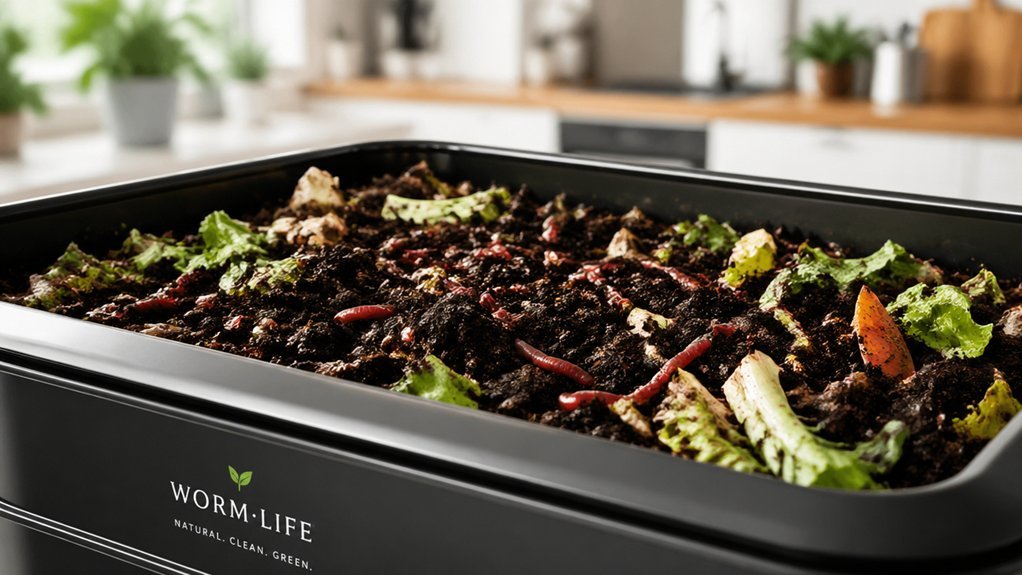
Keep your bin well‑ventilated and the moisture at a wrung‑out sponge level, and you’ll stop the anaerobic pockets that cause stink. Use bulky, fibrous bedding like shredded cardboard or dry leaves, fluff it weekly, and add a few extra air holes if you’re in a plastic container. Feed twice a week—about a quarter of the worm biomass, or 0.5 lb scraps per 2 lb worms—spreading it evenly and avoiding meat, dairy, or excess citrus. If an odor appears, cut back feeding, add dry carbon, and increase aeration; the rest of the guide shows you how to fine‑tune the system.
Why Proper Aeration & Moisture Stop Worm Bin Odor
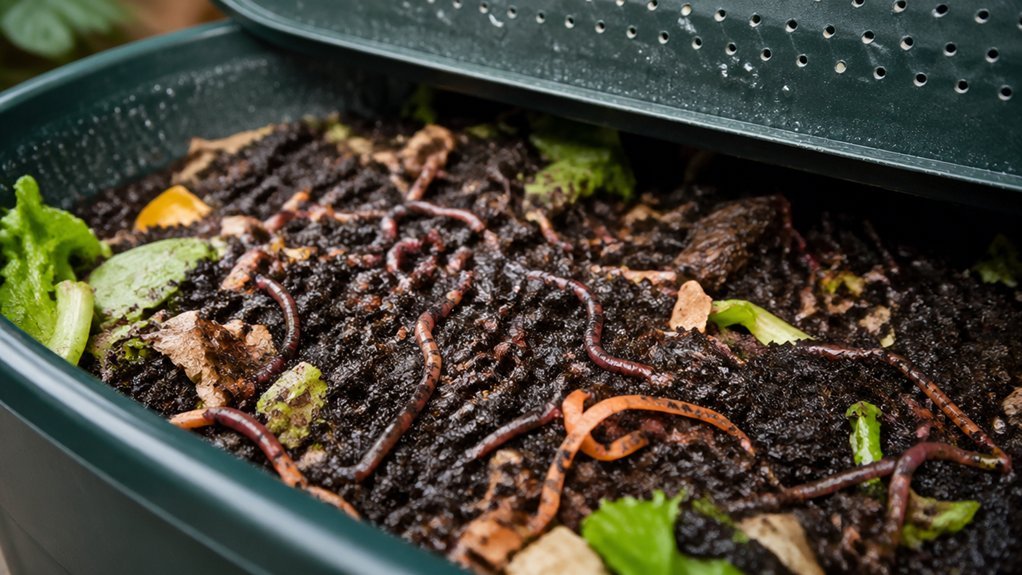
If you keep the bin well‑ventilated and the moisture balanced, foul smells simply won’t develop. You’ll notice that proper aeration stops anaerobic pockets from forming, and the right moisture level keeps the environment aerobic. Add bulky bedding, fluff the mix regularly, and punch extra air holes in plastic containers to boost airflow without drying things out. When the material stays neither soggy nor bone, aerobic microbes thrive and the dreaded rotten‑egg odor stays away. Regularly checking aeration and moisture, and mixing in bulk bedding as needed, ensures a consistently odor‑free indoor vermicompost system. Indoor carton capacity and proper bin setup can further support steady airflow and odor control.
Feeding Routine to Prevent Worm Bin Odor: What, How Much, When
How often should you feed your worm bin to keep it odor‑free? Aim for twice‑a‑week feedings, adding roughly a quarter of the worm biomass each time. That translates to about 0.5 lb of scraps per 2 lb of worms. Spread the food evenly across the surface; never pile it in one spot, because concentrated pockets invite worm bin odor. Stick to fruit, veg, coffee grounds, and crushed eggshells—skip meat, dairy, oily foods, and large citrus. Over‑feeding overwhelms the worms, leaves uneaten material to rot, and breaks moisture management. If you notice a smell, remove the excess, freeze it for later, or move it to an outdoor system. Consistent, moderate feedings keep the bin healthy and odor‑free. Balanced nutrient delivery supports steady worm activity and reduces odor risk.
Choose & Maintain Odor‑Free Bedding for Your Bin
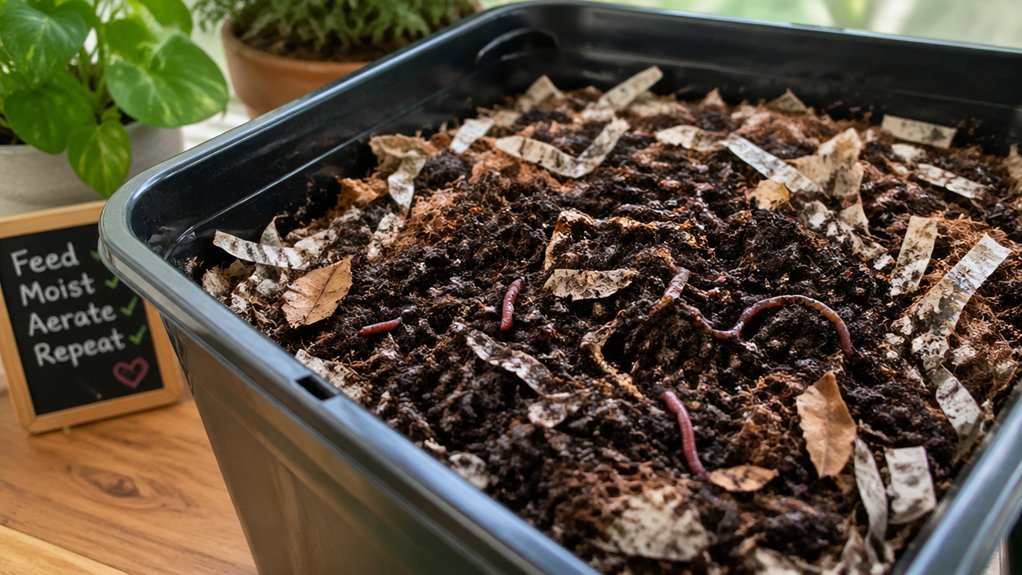
Ever wondered why some worm bins stay fresh while others stink? You can keep yours odor‑free by choosing the right bedding and maintaining it properly. Use bulky, fibrous materials like shredded cardboard, paper, leaves, dry grasses, or peat moss. These keep the bin fluffy, promote airflow, and absorb excess moisture. Aim for a wrung‑out sponge texture—moist but not soggy. Fluff the bedding weekly or biweekly to break up anaerobic pockets and restore airflow, and add carbon‑rich browns to balance greens for stable moisture and reduced odors bedding balance. Remember, insufficient or overly wet bedding triggers odor, so monitor moisture levels and adjust as needed. This routine gives your worms a healthy, scent‑free habitat.
Fast Fixes When Worm Bin Odor Persists
Once your bin’s bedding is set, a lingering smell usually means something’s gone off‑balance. You’ll want to act fast, because persistent odor signals that the ecosystem is stressed. First, cut back on feeding and pull out any soggy scraps; over‑feeding is the most common cause of foul smells. Next, boost aeration by fluffing the bedding, adding shredded cardboard, and poking extra holes or opening the lid for a few hours each day. Finally, turn the pile, sprinkle dry carbon‑rich material, and bury chopped food under the bedding to restore balance. Reduce feeding, remove excess waste. Increase aeration with fluffy bedding and extra holes. Turn, add dry carbon, and bury finely chopped scraps. Aeration helps maintain a healthy balance and can prevent odors from developing in the first place.
Frequently Asked Questions
Does Worm Composting Smell?
Yes, it can smell if you overfeed, keep it too wet, or block airflow, but when you balance bedding, carbon‑rich browns, and green scraps while fluffing regularly, it stays earthy and odor‑free.
What Are the 5 Mistakes That People Commonly Make When Composting With Worms?
You overfeed, add meat or dairy, neglect aeration, keep the bin too wet or compacted, and never mix or turn the bedding. These five mistakes cause smells, pests, and slow decomposition.
How to Get Rid of Worm Smell?
You’ll eliminate worm smell by keeping the bin moist, not soggy, adding extra air holes, fluffing bedding, feeding modestly, burying scraps, and regularly turning to disrupt anaerobic pockets.
What to Put in a Compost Bin to Keep From Smelling and Prevent Meal Worms?
You should add plenty of dry, carbon‑rich bedding like shredded cardboard, leaves, or straw, mix in chopped kitchen scraps, keep the material moist but not soggy, and turn the bin weekly to maintain aeration.
In Summary
By keeping your bin well‑aerated, moist but not soggy, feeding it the right amount at the right times, and using breathable, odor‑free bedding, you’ll eliminate nasty smells for good. If a whiff does appear, a quick fluff, a dry leaf topping, or a splash of water will set things right. Stick to these habits, and your indoor vermicompost will stay fresh, productive, and completely odor‑free.