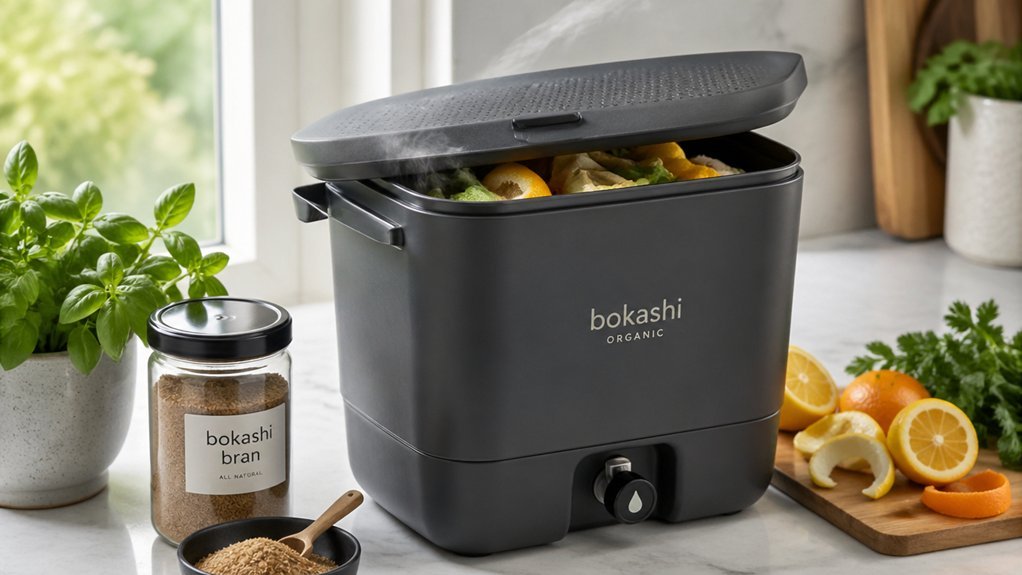
Seal the bin tightly and press the lid firmly, using tape or a rubber gasket if it moves with light pressure. Keep moisture in check by layering dry absorbents—shredded egg cartons, newspaper, or bokashi bran—under and over wet scraps, and add a generous 20 ml of bran per liter of waste to maintain the carbon‑nitrogen balance. Drain the bokashi tea daily, dilute it (1 cup tea to 100 cups water), and pour it into soil. Watch for a sweet‑pickle scent and white mold; a rotten‑egg or blue/green mold means air leaks or excess moisture, so re‑seal and add more dry layers. If you follow these steps, the next section will show you how to troubleshoot persistent problems.
Identify Bokashi Bin Smells: Healthy vs. Bad Odor
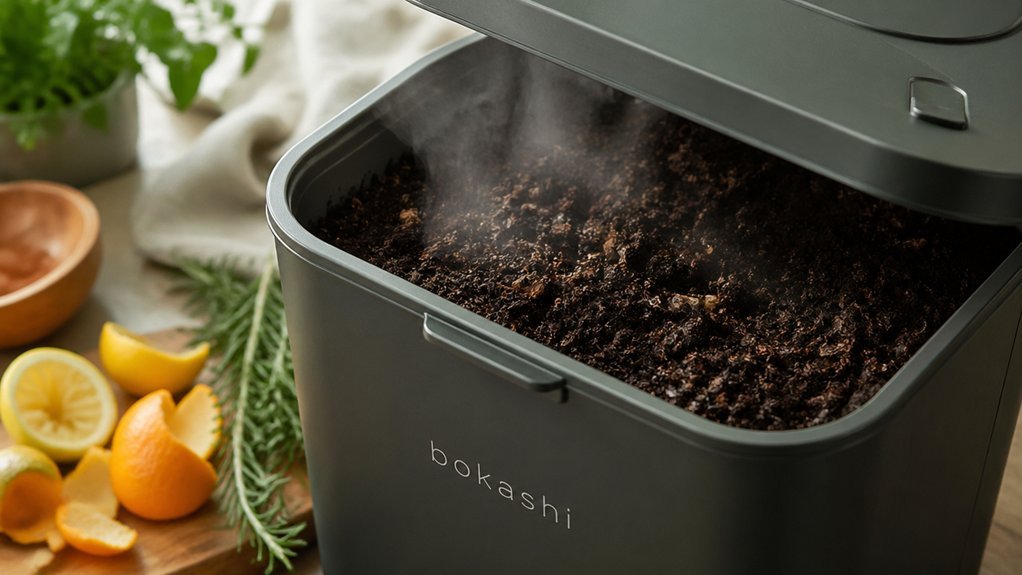
Ever wondered how to tell if your bokashi bin is thriving or failing? You’ll know a healthy bin by its sour, pickle‑like odor and a thin white mold that smells sweet. That scent means the microbes are fermenting correctly, and the moisture level is just right—neither soggy nor bone‑dry. If you start smelling rotten eggs, sulfur, or a strong, foul stench, something’s wrong. Excess moisture can turn the bin overly wet, amplifying the odor and encouraging blue or green mold with a putrid smell. Persistent foul odors also hint at air leaks or food decay rather than proper fermentation. Keep an eye on both moisture and odor; a balanced moisture content yields a pleasant, fermented smell, while any shift to a rotten, sour stench signals you need to adjust the bin’s conditions. Maintenance practices can help you prevent odor buildup by ensuring regular filter and bin upkeep.
Seal Your Bin to Stop Air Leaks
If the sour, pickle‑like scent you’ve been enjoying suddenly turns sour and foul, the likely culprit is air slipping into the bin. An airtight seal stops that., so you must keep the lid pressed firmly and the spigot tightly closed.
When the lid moves with light pressure, reinforce it with tape or a rubber gasket to block air leaks. Check the drain tap each day; a loose tap lets oxygen in and accelerates spoilage.
Opt for a bin that snaps shut and seals around any drilled holes—white mold there usually signals infiltration.
Balance Moisture With Absorbents and Dry Layers
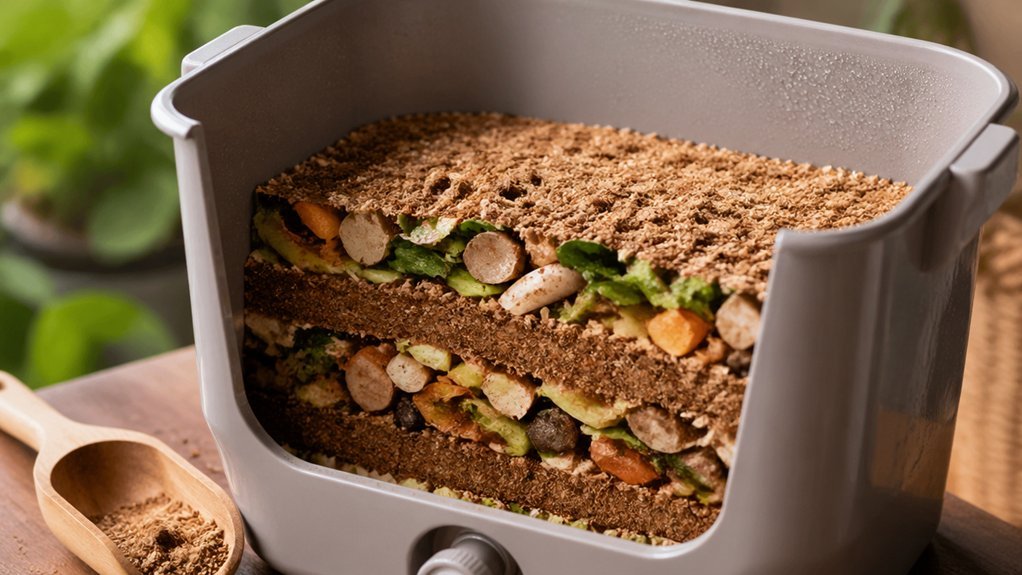
Often the key to a thriving bokashi bin is keeping moisture in check, and you can do that by layering absorbent materials and dry scraps strategically. Start with a base of shredded egg cartons or Upcycled Bokashi; these absorbents wick excess liquid and prime the bin for fermentation. Before you toss in wet veggies, squeeze out any drip and mix them with drier items like shredded paper or cardboard. Top each addition with a thin sheet of newspaper or a light carbon source to pull condensation away from the lid. If you notice condensation or a fluffy white film, add another dry layer or more absorbents right away. This routine keeps the environment balanced, preventing anaerobic spikes and foul odors. Regularly check the spigot and lid seals to maintain airtight conditions and minimize odors as the system ferments odor-control.
Add Sufficient Bokashi Bran for Robust Fermentation
You’ll want to spread a generous layer of bokashi bran over each batch of waste, sprinkling it after every new layer you add. This ensures the microbes have enough food to keep fermentation strong and the odor down. Regularly reseal the container to maintain airtight conditions and maximize ongoing fermentation efficiency with the added bran layer odor control.
Generous Bran Layers
Add a generous layer of Bokashi bran each time you load waste, and you’ll keep fermentation strong and odor‑free. You should spread the bokashi bran in a thick, even sheet rather than sprinkling tiny bits. A 20‑milliliter dose per addition gives enough material for moisture absorption, balances the carbon‑to‑nitrogen ratio, and delivers the beneficial microbes that drive anaerobic breakdown. Press the layer firmly to eliminate air pockets and ensure intimate contact with the waste. If the food scraps are especially wet, increase the bran amount slightly; this compensates for excess liquid and maintains the sealed environment that prevents smells. Consistently applying a robust bran layer creates uniform fermentation, keeps the bin dry, and eliminates foul odors. Odor control helps keep the kitchen environment fresh by supporting consistent microbial activity and moisture management.
Sprinkle After Every Layer
Ever wondered why a Bokashi bin stays fresh? You keep it lively by sprinkling bokashi bran after every layer of waste, which fuels anaerobic fermentation and boosts odor control. A generous base of 20 ml bran per liter of scraps jump‑starts microbes, and packing each layer tightly keeps the bran‑to‑waste ratio high. Re‑apply bran whenever you add new food bits, and you’ll curb moisture pockets and keep smells at bay.
- Measure 20 ml bran per liter of waste.
- Sprinkle evenly over the layer.
- Press the waste down firmly.
- Repeat for each new layer.
This routine maintains robust fermentation, minimizes offensive odors, and keeps your bin odor‑free.
Drain Bokashi Tea Frequently and Dilute for Use
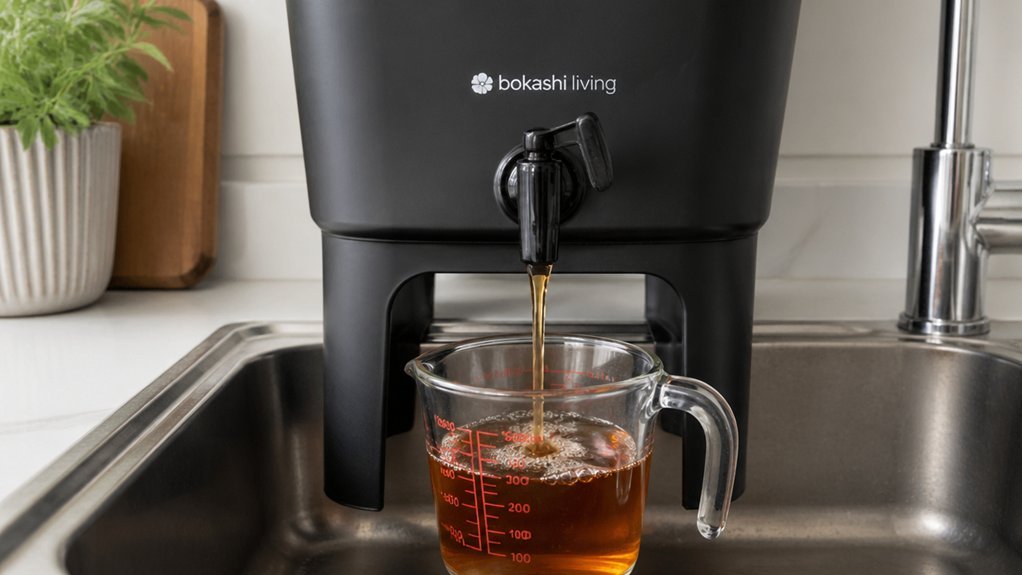
Why let your bokashi bin turn into a stinky mess? Drain the bokashi tea every day or two to keep odors at bay and collect the liquid for a nutrient‑rich fertilizer. Dilute the tea before you splash it on plants—1 part tea to 100 parts water works for most garden beds. Frequent drainage stops nutrient buildup that fuels pathogens, and it prevents the tea from rotting and releasing a horrific smell.
| Step | Action | Reason | |
|---|---|---|---|
| 1 | Open the drain valve | Release excess liquid | |
| 2 | Collect tea in a container | Preserve fertilizer | |
| 3 | Measure 1 cup tea | 100 cups water | Ensure safe dilution |
| 4 | Mix thoroughly | Even nutrient distribution | |
| 5 | Apply to soil | Boost plant health |
New tip: Regularly inspect your bokashi setup for any signs of leakage or warped components to maintain a clean, odor-free system jar compatibility.
Troubleshoot Mold & Smell: White vs. Blue/Green
After you’ve drained the bokashi tea, keep an eye on any mold that shows up on the bucket’s surface. White mold usually means your microbes are active and may be slipping through a tiny leak; it often comes with a sweet, pickle‑like aroma that signals healthy fermentation. Blue/green mold, however, signals trouble—its presence usually brings a putrid, sour smell and points to spoilage or excessive air infiltration. Inspect drilled holes and seams for gaps; seal them with food‑grade silicone. Verify the lid fits tightly and the gasket isn’t cracked. Add a thin layer of fresh bokashi bran each cycle to reinforce anaerobic conditions. If blue/green mold appears, discard the batch, clean the bucket thoroughly, and reset the system before restarting. Also consider ensuring your setup uses an OMRI‑listed organic amendment to support beneficial microbes mold indicators and adjust to maintain proper anaerobic conditions.
Salvage or Dispose of a Failed Bokashi Bin
If you notice a strong odor or mold, first gauge how bad it’s and decide whether a quick re‑ferment with extra bokashi bran might revive it. Consider improving aeration by using a long-reach aerator to enhance airflow and reduce odors air circulation. If that doesn’t work, you can safely bury the contents in soil or add them to a compost heap for a few weeks, keeping the area clear of planting.
As a last resort, toss the bin in the garbage, knowing the material will still break down and release nutrients over time.
Assess Odor and Mold
Ever noticed a rotten‑egg stench drifting from your bokashi bin? That odor tells you the fermentation went off‑track. First, sniff for a sweet‑pickle aroma; if it’s present and you see white *mold*, the microbes are still working and you can likely salvage the bin. If you detect a pungent, sour smell or see blue/green *mold*, air has leaked and the contents are spoiling. Here’s how to assess:
- Identify the scent – sweet‑pickle = good, foul = problem.
- Check *mold* color – white = active, blue/green = contamination.
- Inspect the seal – any gaps let oxygen in, causing foul odor.
- Drain and clean – remove bokashi tea, scrub residues, then reseal tightly.
If the foul odor persists after these steps, the bin is likely a failure and should be disposed of safely.
Re‑Ferment With Extra Bran
Add a generous handful of bokashi bran to each new layer of waste and press it firmly to restore anaerobic conditions. If the bin starts to smell or decompose slowly, sprinkle extra bokashi bran over the exposed material and re‑seal tightly.
Aim for roughly 20 mL of bran per liter of waste, adjusting as you get a feel for your bin’s activity. The added microbes jump‑start re‑fermentation, pushing out foul odors and re‑establishing the sweet‑pickle scent.
Press the waste down after each addition to eliminate air pockets that could invite spoilage. If the smell persists despite a re‑fermentation effort, check moisture levels and seal integrity before deciding whether to salvage further or discard the batch.
Bury or Compost Safely
When a bokashi bin fails, you can safely salvage the material by burying it in soil or adding it to a compost pile for 4–6 weeks before planting nearby. This pause lets the bokashi smell dissipate and the microbes finish their work.
- Pick a spot – Choose a garden bed away from current plant roots.
- Mix with soil – Combine the contents with a handful of dry bokashi bran to break compost safely. odor odor..3. Cover and wait – Bury 6–8 in deep, water lightly, and let it rest 4–6 weeks.
- Remix before planting – Gently turn the soil, then plant as usual.
If you prefer disposal, use the green organics bin or a local food‑scrap drop‑off. Only resort to regular garbage as a last option.
Frequently Asked Questions
Why Does My Bokashi Bin Smell?
Your bokashi bin smells because decaying food, excess moisture, or air leaks create anaerobic spoilage; improper sealing lets odors escape, and un‑drained liquid or mold can amplify the foul scent.
Can I Put Eggshells in Bokashi?
Yes, you can add eggshells to bokashi. Crush them into a fine powder or small shards first, then mix evenly with the bran and waste to avoid air pockets and keep odors under control.
What Is the Main Problem With Bokashi Composting?
You’re dealing with excess moisture and air infiltration; they create odor, slow fermentation, and spoil the bin. Proper sealing, drainage, and moisture control keep the process anaerobic and odor‑free.
How to Reduce Compost Bin Smell?
You’ll cut smells by draining liquid daily, sealing the bin tightly, adding dry absorbents, layering newspaper on top, compressing waste with enough bokashi bran, and using a rubber seal to block air.
In Summary
By sealing the bin, balancing moisture, and feeding it enough bokashi bran, you’ll keep fermentation on track and ditch the nasty odor. Drain and dilute the tea regularly, and watch for mold’s color to catch problems early. If you follow these steps, your bokashi system stays fresh, efficient, and ready to turn waste into nutrient‑rich compost without any unpleasant smells.