Your compost stinks when anaerobic bacteria thrive in a soggy, nitrogen‑rich pile, usually because you’ve added too many greens, not enough browns, or the pile lacks airflow. Balance the mix with roughly two‑to‑three parts carbon‑rich browns for every part nitrogen‑rich greens, turn it often to boost aeration, and keep moisture at a wrung‑out‑sponge level. Add dry leaves, shredded newspaper, or coarse material to improve drainage, and consider vermicomposting or Bokashi to speed up decomposition. Keep these steps in mind and you’ll discover even more ways to keep your bin fresh.
What a Healthy Compost Should Smell Like
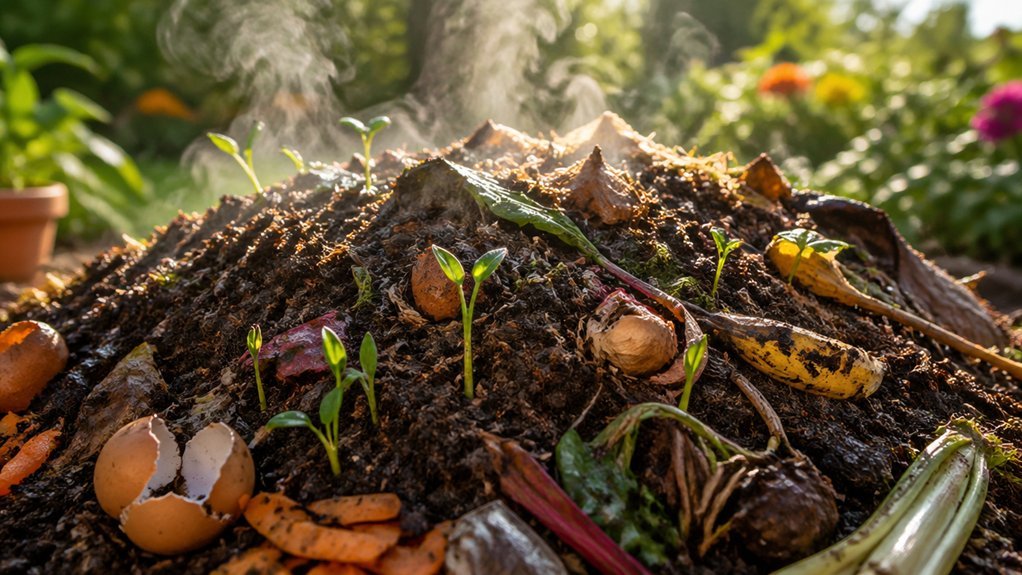
A healthy compost smells like damp forest earth—rich, mellow, and slightly sweet—rather than sour or rotten. You’ll notice an earthy smell that signals the right balance of greens and browns, proper moisture, and good aeration. When you turn the pile regularly, you keep oxygen flowing and prevent anaerobic pockets that cause a compost smells bad. A mature, finished compost scent is subtle, like a forest floor after rain, not pungent or ammonia‑like. If you see white fuzz or gentle mold, that’s a sign microbes are active, not a foul odor. Keep moisture at a wrung‑out sponge level, mix greens with browns, and turn the pile often to maintain that pleasant, finished compost scent. Odor control can be enhanced by ensuring even carbon distribution and avoiding excessive moisture that leads to unpleasant notes.
Why Compost Odor Happens: Common Causes
Why does your compost stink? You’ve probably got a stinky compost because anaerobic bacteria have taken over. When you pile too many greens vs browns, the excess nitrogen creates soggy spots that block airflow/aeration. Without proper turning pile, oxygen can’t reach the center, and the moisture balance tips toward wet, encouraging foul smells. Rotting animal products add protein‑rich waste that fuels odor causes faster than plant matter. Even a single layer of too much green material can drown the browns, turning the heap into a sour, egg‑like perfume. The remedy starts with adding brown material, adjusting moisture, and improving aeration. Vermicomposting can further help by introducing red wiggler worms that process food scraps more evenly and reduce odors when properly maintained. The new balance should emphasize more browns, better airflow, and controlled moisture to suppress foul smells.
| Issue | Effect |
|---|---|
| Too many greens | Anaerobic bacteria surge |
| Lack of airflow | Odor causes amplify |
| Excess moisture | Soggy pile, foul smell |
| Animal scraps | Strong, persistent stink |
How to Stop Compost Odor by Balancing Greens & Browns
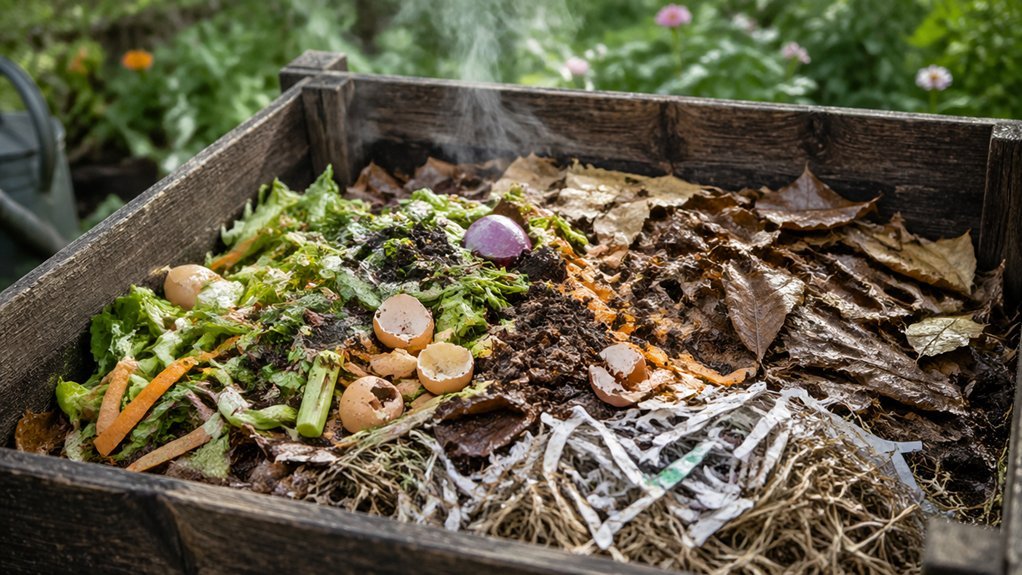
Ever noticed that a pile of kitchen scraps suddenly smells like rotten eggs? That’s a sign your compost pile lacks the right greens‑browns balance. Aim for roughly two‑to‑three parts carbon‑rich brown to one part nitrogen‑rich greens. When you add fresh food, toss in extra dry leaves or shredded newspaper to keep the mix porous. Spread green materials evenly, then layer a generous amount of brown material on top; this creates channels for aeration. If you catch an ammonia‑like whiff, increase the brown fraction and give the pile a good turning. By adjusting inputs gradually and monitoring odor after each addition, you’ll maintain odor control and a healthy, active compost pile. Integrating bokashi moisture control can further support faster fermentation and odor reduction odor control in compact or indoor setups.
How to Stop Compost Odor by Boosting Aeration & Controlling Moisture
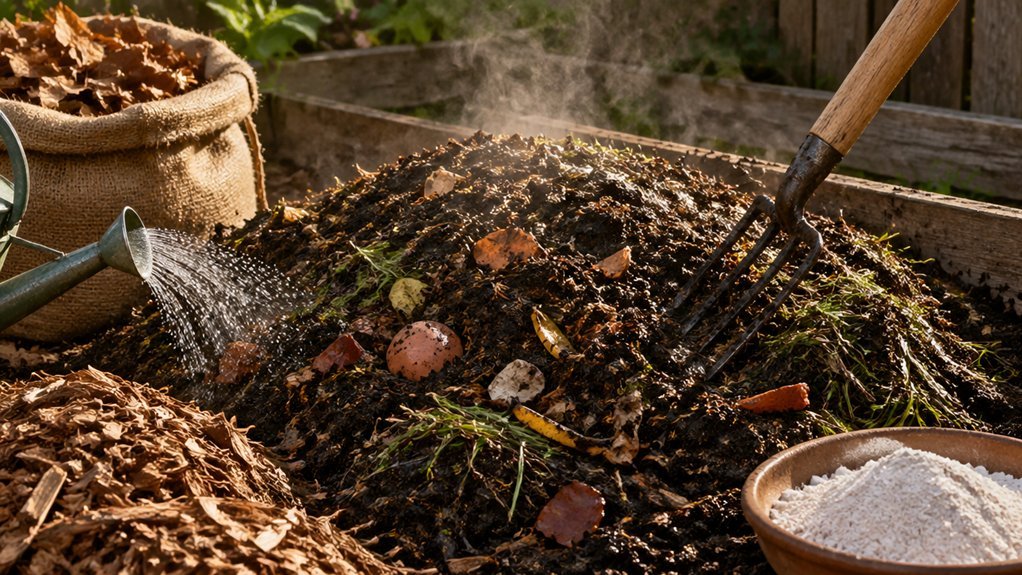
Ever noticed that a compost pile turns sour and stinky after a rainstorm? You can fix it by focusing on aeration and moisture control. Turn the pile weekly to pump oxygen in, shifting the process from anaerobic to aerobic and cutting sour smells. If the mix feels soggy, add carbon‑rich browns like dry leaves or shredded cardboard, then turn again to improve airflow. Keep a greens‑to‑browns ratio of roughly 2:1 or 3:1, favoring browns to absorb excess liquid. Boost drainage by layering coarse material at the base and position the bin where it gets 6–8 hours of sun exposure each day. During heavy rain, cover the pile and pause juicy additions until it dries, maintaining regular turning to keep oxygen moving. Adding a small amount of dry matter to each turn can help maintain airflow and reduce odors aeration.
How to Stop Compost Odor With Simple Add‑Ons and Good Practices
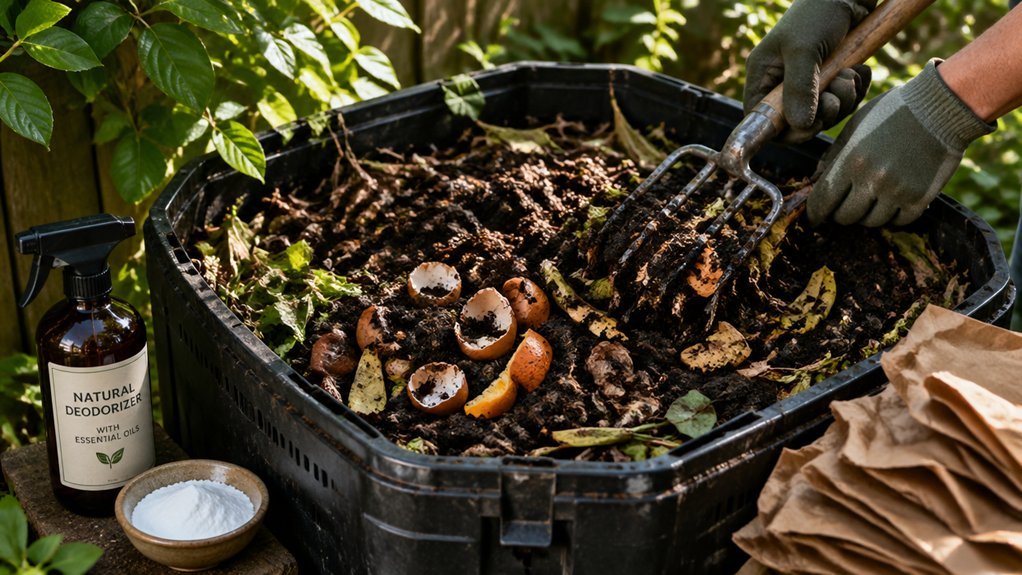
Feeling a foul whiff from your compost? You can curb compost odor by tweaking what you add and how you manage the pile. Simple add‑ons and good practices keep aeration strong, moisture balanced, and anaerobic decomposition at bay.
- Sprinkle extra browns—dry leaves, shredded cardboard, straw—throughout the mix to boost carbon-rich materials and improve structure.
- Layer greens and browns like a lasagna, aiming for a 2:1‑3:1 browns‑to‑greens ratio to keep nitrogen in check.
- Turn the pile weekly, introducing oxygen and preventing stale pockets that cause smells.
- If it’s too wet, cover it, pause juicy scraps, and add dry browns to absorb excess moisture.
- Stick to open pile management: avoid meat, dairy, and greasy foods that trigger anaerobic decomposition.
Frequently Asked Questions
How to Fix a Stinky Compost?
You fix it by adding dry browns, turning the pile often, keeping moisture sponge‑like, and avoiding meat or dairy. Layer browns over greens 2‑to‑1, and aerate whenever the smell spikes.
Is Smelly Compost Ok to Use?
No, you shouldn’t use smelly compost until you fix it. The foul odor means anaerobic conditions, excess moisture, or imbalance. Adjust browns, aerate, and dry it out before applying it to your garden.
Does the Smell of Compost Go Away?
Yes, the odor will fade once you turn the pile, add dry browns, and keep it moist but not soggy. Proper aeration and balanced greens‑to‑browns restore the earthy scent quickly.
What Kills Compost Bacteria?
You kill compost bacteria by turning the pile anaerobic—add too much water, pack it tightly, or overload greens without browns. That smothers aerobic microbes, letting odor‑producing anaerobes dominate.
In Summary
By keeping your pile balanced, aerated, and moist—but not soggy—you’ll banish foul smells for good. Mix plenty of brown material with greens, turn it regularly, and add simple boosters like shredded newspaper or wood chips. These steps let microbes work efficiently, turning waste into rich, earthy compost without the stink. Stick to these habits, and your garden will thank you with a pleasant, nutrient‑rich amendment.