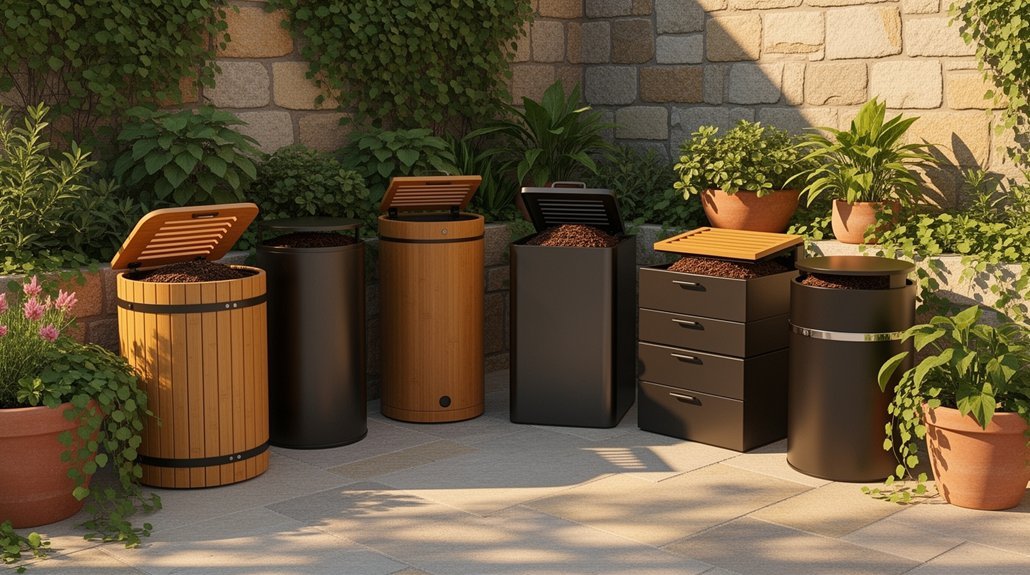
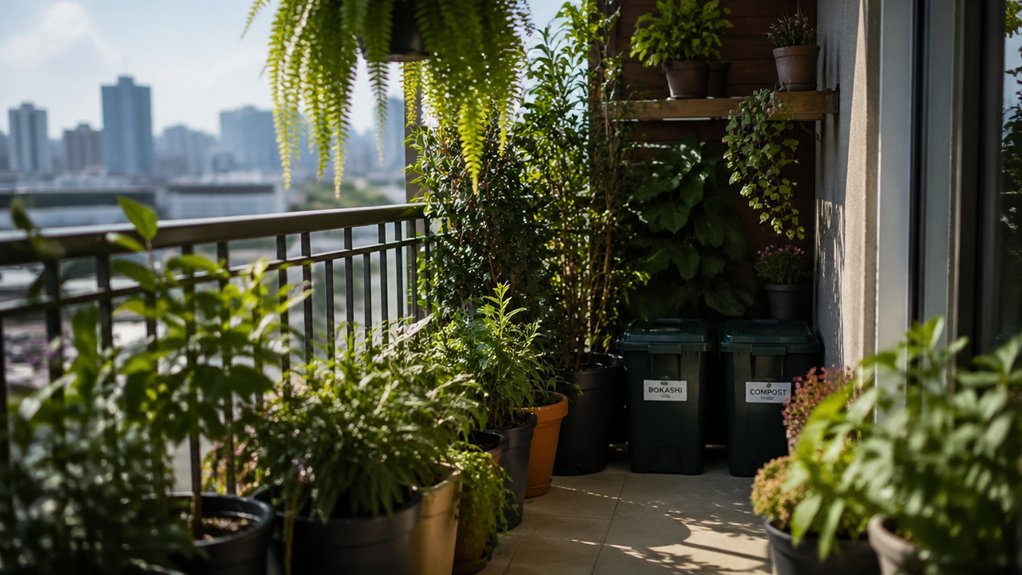
Pick a low‑traffic corner on your balcony that’s shielded from the prevailing wind—ideally behind a railing or next to a wall—and make sure it gets partial shade. Use a solid, level surface like slate tiles or a small stand, then place a sturdy, low‑profile bin on a weighted base of two timber beams and bricks for steadiness. Keep the lid on, add a drainage tray, and turn the pile regularly to control odor and moisture. Continue for tips on seasonal shelter and moisture management.
Find the Most Stable Corner for Your Balcony Compost Bin
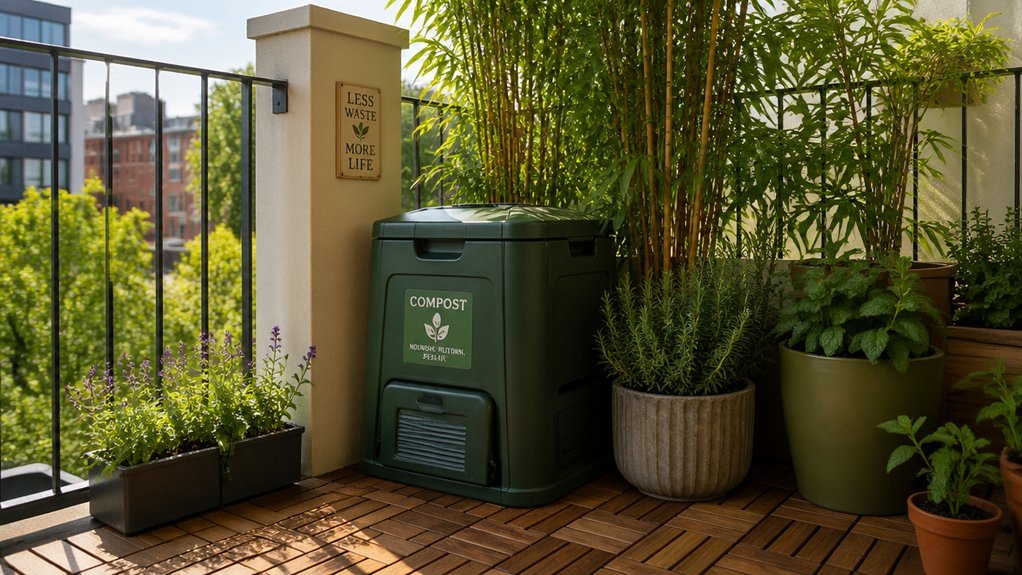
Where should you place your balcony compost bin for maximum stability? Pick a corner that’s shielded from prevailing winds—ideally a spot behind a railing or along the edge where the breeze is low. Make sure the area gets partial shade, avoiding direct sun that dries out the compost and stresses microbes. The surface should be level and solid, like slate tiles or a small stand, to keep the bin from wobbling and to allow drainage. Choose a corner with good airflow but not cramped, so you can turn the pile easily. Keep it away from high‑traffic zones and doors to minimize disturbance and odor complaints, yet close enough for convenient feeding and maintenance. This placement maximizes stability and promotes healthy composting. EPA Safer Choice
Choose a Balcony Compost Bin Design That Resists Gusts
After securing a stable corner, the next step is picking a bin that can stand up to gusty weather. Choose a balcony bin design with a low profile and sturdy walls—tumbler or rigid closed bins beat tall open‑top models for wind resistance. Add a heavy base or ballast, and seal the lid tightly to stop wind from lifting or leaking. Position the bin on the leeward side, sheltered by a wall or railing, while keeping side ventilation holes for airflow. If you can, anchor the bin to a fixed surface or strap two bins together for extra weight and stable placement. Maintaining a 4–6 month filter replacement cadence helps keep odor controlled, especially in outdoor setups where wind can carry scents. Odor control filters can be an important maintenance consideration when using balcony bins outdoors.
Build a Simple Wind‑Shielded Base With Bricks & Timbers
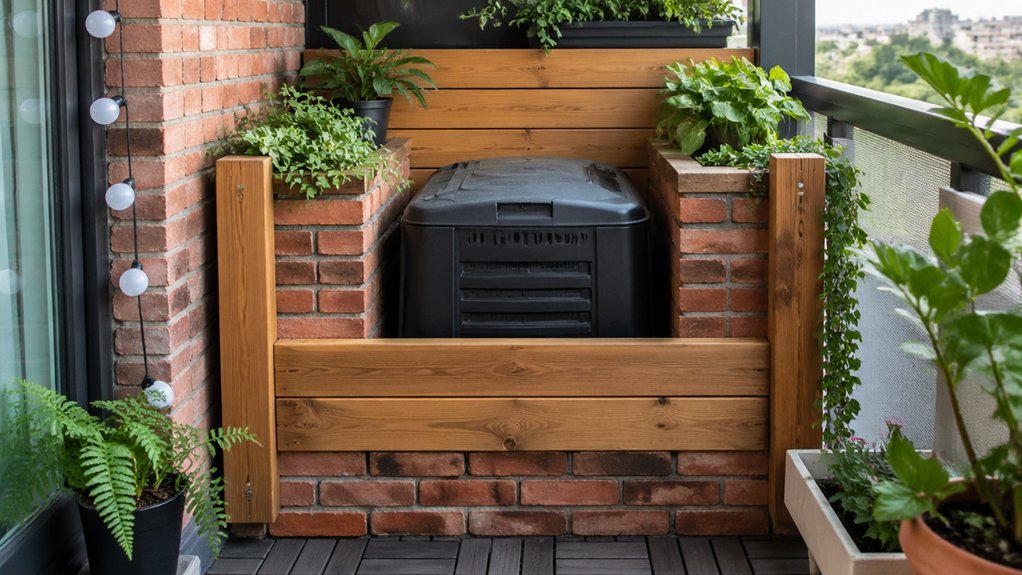
How can you turn a few simple materials into a sturdy, wind‑shielded platform for your balcony compost bin? Start by laying two timber beams side‑by‑side on a shaded spot, then place four bricks at each corner to create a raised, balanced balcony base. The bricks add weight, keeping the structure steady against gusts and foot traffic. Position the base near a wall or railing so the balcony acts as an extra wind‑shielded barrier. Ensure a small gap under the bin for airflow and drainage, preventing waterlogging while allowing oxygen in. This simple timber‑brick combo gives you an elevated, stable platform that resists wind, stays cool, and stays in place. Material balance can help optimize decomposition and airflow for balcony setups.
Control Odor and Drainage on Your Elevated Compost Bin
Ever wondered why your balcony compost smells strong or leaks water? You can curb odor and excess moisture by keeping the lid on and placing the bin in partial shade, which steadies temperature and slows microbial stress. Use a trivet or drainage tray beneath the bin to catch leachate and protect the balcony surface. Balance moisture like a wrung‑out sponge: add browns when the pile feels soggy, and never let it sit in standing water. Ensure aeration by turning the compost regularly or choosing a bin with ventilation holes spaced about five centimeters apart on the sides and bottom. Proper drainage prevents puddles, deters pests, and keeps the compost healthy and odor‑free. Ventilation helps maintain airflow and balance inside the bin.
Seasonal Tips for Protecting Your Balcony Compost Bin
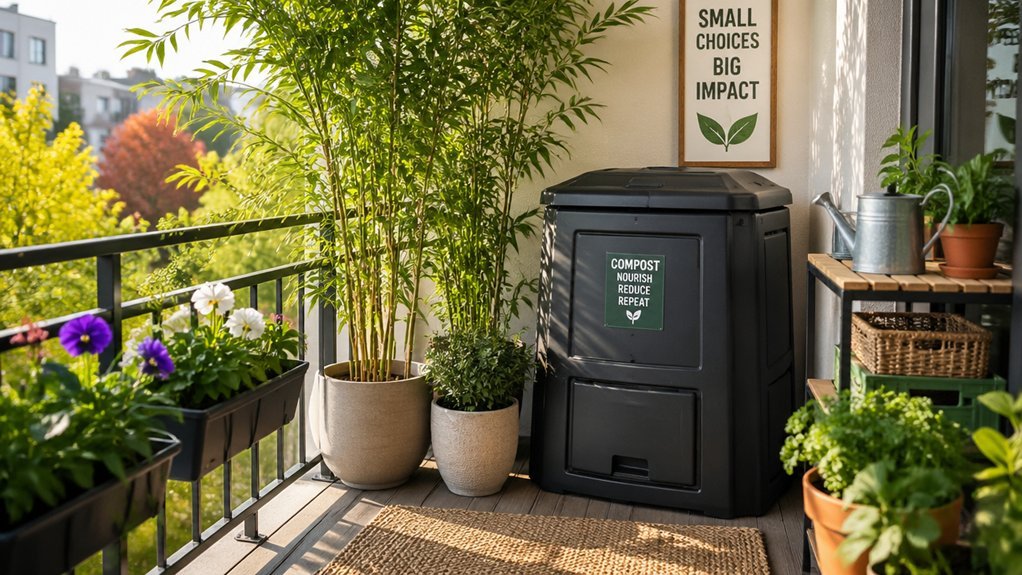
One simple rule: place your compost bin where it’s shielded from the prevailing wind—near a wall, railing, or other solid barrier—to keep drying and odor spread at bay. In winter, wrap the bin with bubble wrap or a blanket to retain heat, which keeps microbes active and prevents the compost from freezing. When rain falls, add a lid and a small trivet so excess water drains, avoiding soggy, anaerobic pockets. Summer calls for partial shade; a balcony awning or a nearby plant can keep temperatures down while still allowing airflow. During spring and fall, check moisture daily, sprinkle brown material to balance greens, and empty any collected liquid. These shelter and moisture‑management steps keep your balcony compost healthy year‑round. A stable, properly sealed setup also helps prevent leaks and odors by supporting a well‑drained, low‑spillage system spigot stability.
Frequently Asked Questions
Can You Have a Compost Bin on a Balcony?
Yes, you can keep a compost bin on your balcony; just pick a compact, ventilated container, position it in a shaded, sheltered spot with partial sunlight, and maintain proper moisture and airflow to avoid odors.
Where Should I Position My Compost Bin?
You should set the bin in a partially shaded corner with good airflow, away from foot traffic, pets, and children, and place a drip tray underneath to catch any liquid drainage.
Where to Put a Compost Bin Outside?
Put the bin in a shaded, sheltered spot away from direct sun and strong gusts, on a waterproof tray, with good ventilation, easy access for daily feeding, and clear from high‑traffic pathways.
What Are Common Composting Mistakes?
You often overwater, add too many nitrogen‑rich greens, neglect browns, expose the bin to extreme temperatures, skip regular turning, and toss citrus, onions, or oily foods, all of which cause odors, pests, and slow decomposition.
In Summary
By picking a sturdy corner, opting for a wind‑resistant design, and adding a brick‑and‑timber shield, you’ll keep your balcony compost bin stable and odor‑free. Proper drainage and seasonal tweaks—like extra cover in winter—ensure the bin works year‑round. Follow these steps, and your compost will stay tidy, healthy, and ready to feed your garden, no matter how gusty the city wind gets.