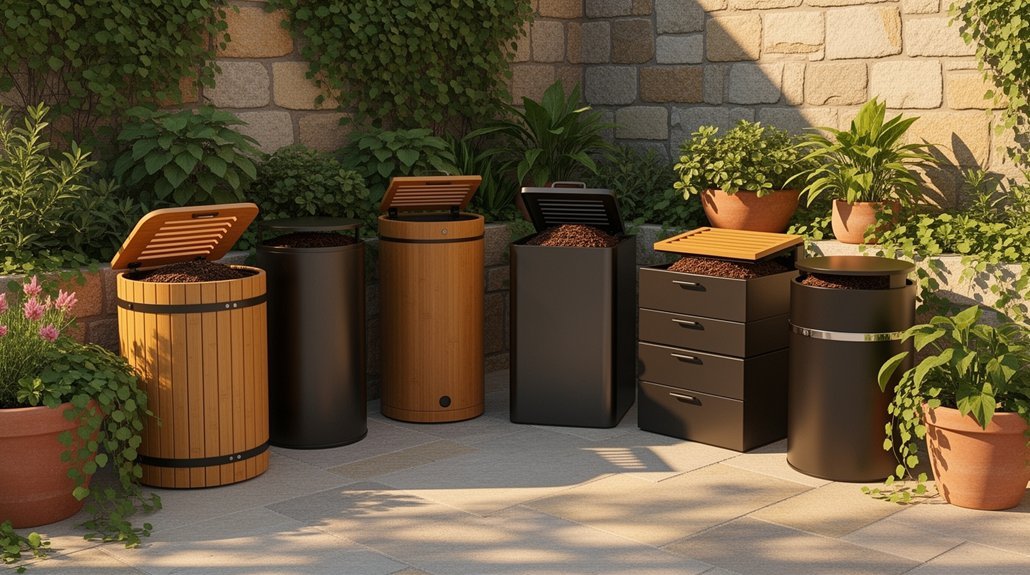
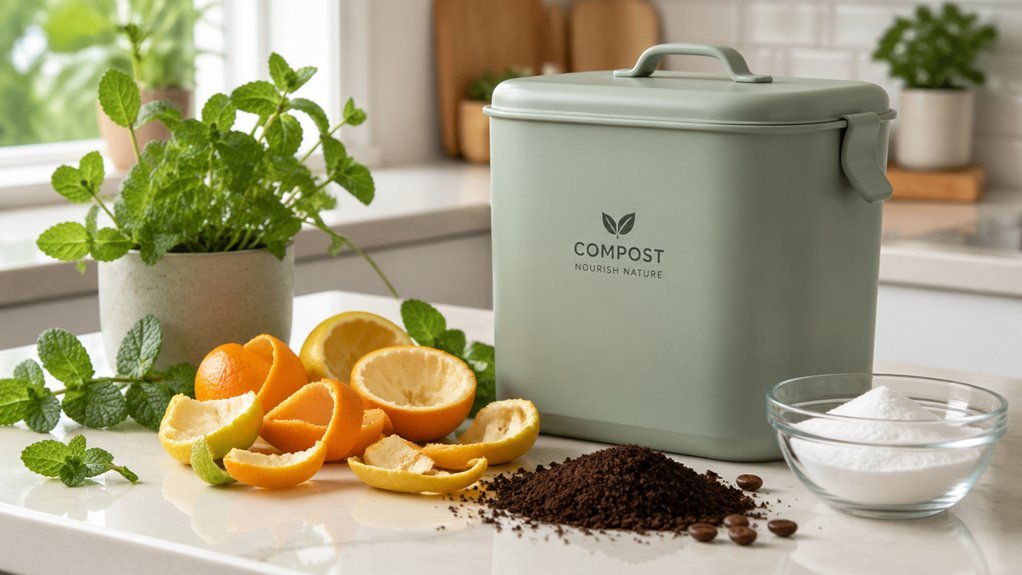
Seal the bin with a tight‑fitting lid and store it in a cool, dark spot to slow gas release. Keep meat, dairy, oil, and sauces out, and after each green addition sprinkle a thin dry brown layer—shredded paper, cardboard, or sawdust—to soak up moisture and block odors. Freeze scraps before tossing them in, empty the bin at least weekly, and rinse it outside to remove residue. For a quick fix, dust baking soda or activated charcoal on the surface. Continue for and you’ll discover more tips.
Seal Your Indoor Compost Bin With a Tight‑Fitting Lid
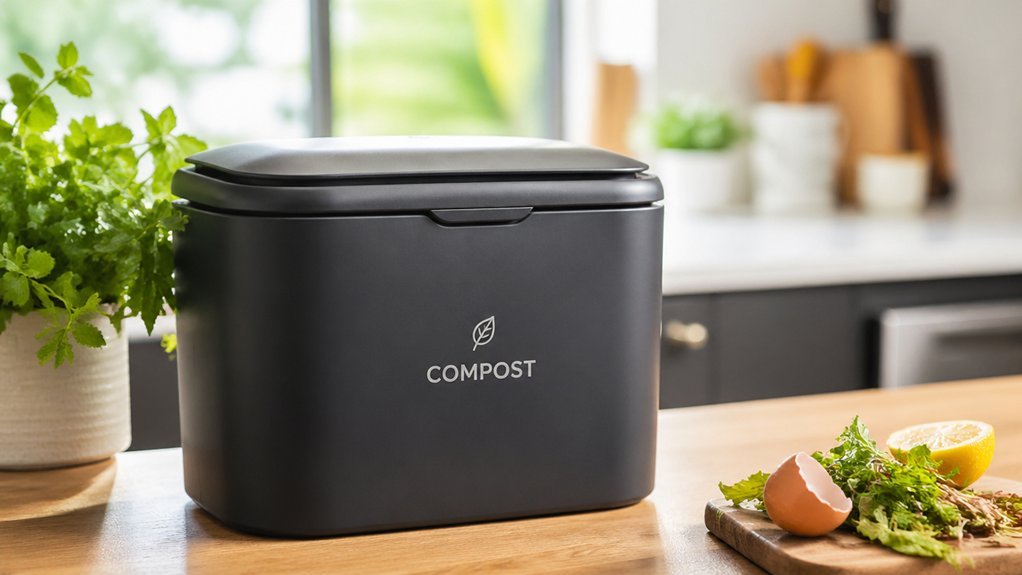
Because odors escape through any opening, a tight‑fitting lid is the single most effective way to keep your indoor compost bin odor‑free. You’ll want a lid that closes completely, leaving no gaps for smells to slip out.
In cities like NYC, the sturdiest bins have solid handles and lids that stay shut, not just charcoal filters. When you seal the bin, you cut fruit‑fly attraction because flies can’t reach exposed fruit scraps. A properly sealed bin eliminates roughly 99 % of odor risk, assuming you manage the contents and keep the lid functional.
If you still notice smells, double‑check the seal, tighten any loose hinges, and reseal the bin promptly. This simple step keeps your kitchen fresh and your compost thriving. Sealed Lids protect against leaks and pests, ensuring ongoing odor control and easier maintenance.
Store the Bin in a Cool, Dark Spot to Slow Odor
Now that your bin is sealed, place it where it stays cool and dark. A proper compost bin placement in a cool environment slows decomposition, curbing gas release and giving you natural odor control. Choose a shaded, temperature‑controlled spot away from stoves, radiators, or direct sunlight. By keeping the bin in a low‑heat area, moisture stays modest and microbial activity slows, so foul smells hardly develop. This simple tweak makes indoor composting almost invisible to the nose. Consider using biodegradable pots or packaging from herb kits to further reduce waste biodegradable materials and support a zero-waste approach.
Keep Meat, Dairy, Oil, and Sauces Out of the Bin
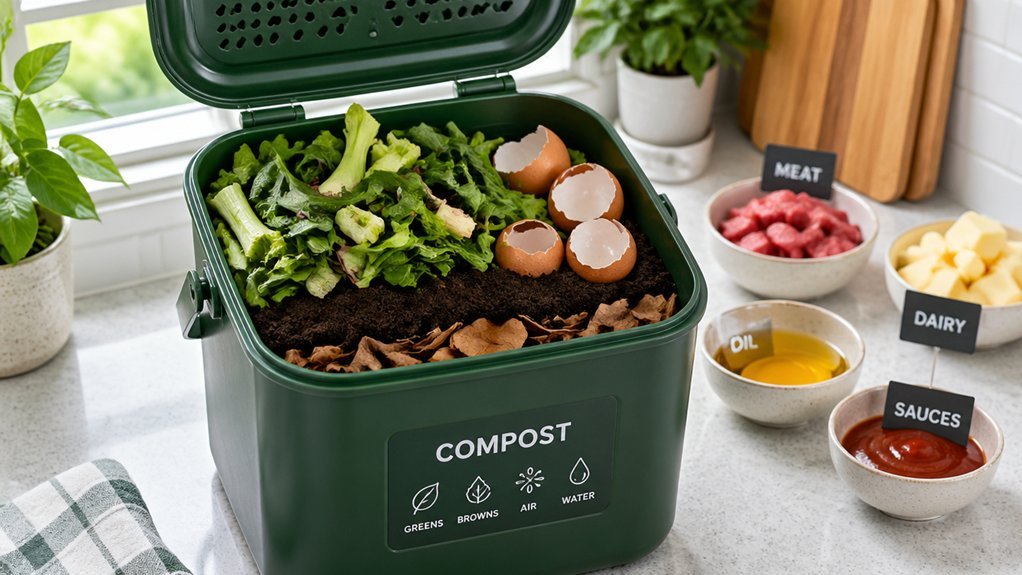
Avoid putting meat, dairy, oil, or sauces in your indoor compost bin; these ingredients generate the strongest odors and are tough to control inside. Stick to meat‑free scraps—fruit peels, vegetable trimmings, coffee grounds—to keep the bin fresh. When you accidentally drop a piece of cheese or a strip of bacon, pull it out right away and cover the spot with a layer of brown materials like shredded paper or cardboard; the dry layer so up moisture and helps odor control. Freeze any meat, dairy, or oily leftovers until you can toss them outdoors, so they never enter the bin. By consistently feeding only plant‑based waste and using brown materials as a barrier, you’ll maintain a pleasant kitchen environment without lingering smells. Odor control method is enhanced by choosing a bin with a charcoal filter or airtight lid to minimize odors further.
Add a Dry “Brown” Layer After Every Scoop
You should sprinkle a thin dry brown layer—like shredded paper—after each scoop to soak up excess moisture. The brown layer also contributes to improved airflow by creating small air pockets that support aerobic activity within the bin air circulation. If the bin sits longer, just add a bit more brown to keep smells at bay and deter flies.
Absorb Moisture
Ever wonder why a thin brown layer on top of your kitchen scraps makes such a big difference? The brown material acts like a sponge, pulling excess liquid away from the greens and keeping the pile drier. That moisture absorption slows anaerobic breakdown, which is the main source of stinky gases. By adding a fresh dry layer after each scoop, you maintain a barrier that boosts aeration and deters flies, sharpening odor control. The trick works especially in apartments where bins sit for days; the browns keep the surface dry and the microbes happy, so the compost stays fresh longer. Cut-to-fit filters can also help ensure your bin lid seals properly to further reduce odors.
Block Odor Escape
Why not turn every scoop into a built‑in odor barrier? After you remove the top layer of compost, sprinkle a dry brown layer—shredded paper, dry leaves, cardboard, or sawdust—over the fresh scraps. The browns act as carbon‑rich absorbents, soaking up excess liquid that fuels odor‑producing bacteria and restoring moisture balance. They also create a physical shield that blocks smells from escaping the bin while promoting aeration by keeping the material loose and breathable. Keep a box of browns under the sink so you can top off the bin consistently. If the scent lingers, add a thicker brown layer to reinforce the barrier and maintain proper aeration. This simple step dramatically reduces odor without extra chemicals. Odor Control
Encourage Aerobic Activity
When you add a thin dry brown layer right after each scoop of green waste, you immediately soak up excess moisture, keep the bin aerated, and block odor‑producing bacteria. This simple step creates a balanced greens‑browns rhythm that sustains aerobic microbes and prevents the soggy, anaerobic pockets that smell. By consistently topping greens with browns, you maintain proper aeration, speed up decomposition, and keep the compost fresh‑smelling. If a whiff appears, just add another brown layer or give the pile a quick turn to restore oxygen flow.
- Use shredded newspaper or cardboard as the brown layer.
- Sprinkle a handful of dry leaves for extra carbon.
- Keep the brown layer about a quarter‑inch thick.
- Turn the bin once a week to boost aeration.
- Increase browns if the bin feels damp or smells.
Keep the browns balanced to maintain aerobic conditions and prevent odor buildup while you add greens.
Freeze Scraps Before Adding Them to Prevent Odor
If you freeze your kitchen scraps before they hit the compost bin, bacterial activity slows dramatically, so the odors that usually develop during decomposition are kept at bay. To practice freeze scraps for odor control, place them in a tight‑sealing freezer container or reusable bag—avoid regular plastic bags or old Tupperware that can leak.
Compostable bags won’t work because they need heat to break down.
When you’re ready to empty, transfer the frozen material straight to an outdoor compost pile or drop‑off site, letting the decomposition resume outdoors.
This method shines with onion pieces or other pungent waste, keeping indoor composting smells minimal until you can process them outside.
Empty the Bin at Least Once a Week (More Often if Needed)
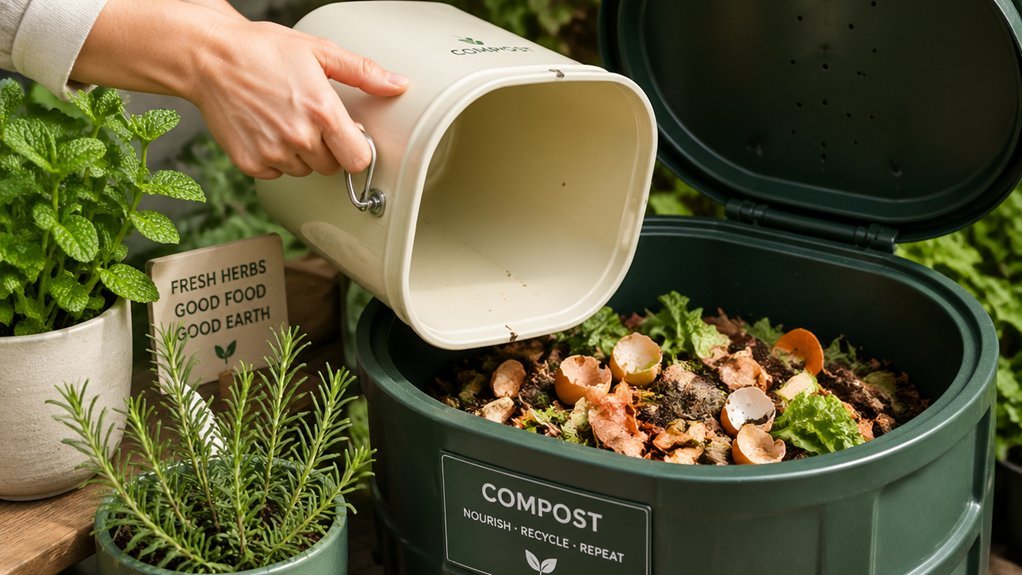
You should aim to empty the bin at least once a week, and more often if you notice excess moisture or a strong smell. Keep an eye on the moisture level and tweak the green‑to‑brown ratio to stay dry and odor‑free. If the scent starts to creep in, simply increase the emptying frequency until it’s under control.
Weekly Emptying Schedule
Do you notice the smell creeping in before you’ve emptied your indoor compost bin? That odor signals it’s time to tighten your bin emptying routine. A consistent weekly schedule keeps scraps from fermenting long enough to produce strong smells. If you cook a lot, aim for every 4–5 days; the extra turn prevents moisture and gases from building up. Treat emptying like a chore you set a reminder for, and always rinse the container with soap and water afterward. This habit not only curbs odor but also makes indoor composting more pleasant for everyone.
- Set a specific day each week for emptying.
- Adjust to every 4–5 days when waste volume spikes.
- Transfer scraps to an outdoor bin before smells appear.
- Increase frequency immediately if odor surfaces.
- Wash the bin with soap and water after each emptying.
Monitor Moisture Levels
A steady weekly emptying routine cuts down moisture, but keeping an eye on the bin’s dampness between cleanings is just as important.
When you feel the compost feels soggy, pause and add extra dry browns to soak up excess liquid.
Check the surface daily; a slight wet sheen signals that moisture is building faster than your bin can drain.
If the bin smells before the next emptying, it’s a sign the moisture level is too high, so increase the browns and maybe shorten the interval to four days.
After each emptying, rinse the bin with soap and water to wipe away residue that fuels odor‑causing bacteria.
Balancing moisture with browns restores odor control and keeps the compost fresh.
Adjust Green‑Brown Ratio
Where does the balance between browns and greens tip the scale from fresh to foul? You keep it at roughly 2:1 or 3:1 browns to greens, layering kitchen scraps with leaf litter, shredded paper, or cardboard. If the pile feels soggy or emits a sour whiff, sprinkle more browns, then turn it to restore aeration. Empty the indoor bin at least once a week, or every 4–5 days when you add lots of scraps, to prevent odor buildup and keep the process aerobic.
- Add greens (fruit, veg, coffee grounds) in thin layers.
- Follow each green layer with a generous brown layer.
- Keep greens off the very top to avoid excess moisture.
- Toss extra browns when the mix feels wet or smells.
- Turn or aerate after each addition and before emptying.
Wash and Rinse the Bin Outside to Remove Residue
Why not start by giving your compost bin a quick wash outside? Grab an old sponge or rag, add a splash of soap, and scrub the interior. This bin cleaning removes residue that shelters odor‑causing bacteria, boosting odor control.
When you finish scrubbing, perform an outdoor rinse with a hose or bucket of water. Rinsing outside prevents washing discharge from adding moisture and smells to your indoor space. Make sure the water runs away from doors and windows.
After the rinse, shake out excess water and let the bin air‑dry completely before refilling. A dry surface discourages lingering moisture that could foster odors, keeping your compost system fresh and pleasant.
Mask Odors Temporarily With Baking Soda or Charcoal
After rinsing and drying the bin, you can add a thin layer of baking soda or a sprinkle of activated charcoal to keep smells at bay. Both powders act as quick odor control agents, soaking up volatile compounds while you work on longer‑term solutions. Use them after each emptying, but remember they’re only a mask, not a fix. Seal the bin tightly, turn the compost regularly, and keep moisture balanced for the best results.
Add baking soda or activated charcoal after each emptying to mask odors, then seal, aerate, and balance moisture.
- Sprinkle 1‑2 tablespoons of baking soda across the surface.
- Add a handful of activated charcoal granules for deeper absorption.
- Close the lid securely to limit air exchange.
- Rotate the compost every few days to improve aeration.
- Replace the powder weekly for consistent odor control.
5‑Step Checklist to Eliminate Persistent Compost Smells
Ever notice that your indoor compost smells like a kitchen nightmare despite regular emptying? Follow this five‑step checklist to silence those compost smells for good.
| Step | Action | Why it works |
|---|---|---|
| 1 | Empty bin weekly (or every 4‑5 days if you cook a lot) | Removes excess moisture and gases before they turn anaerobic |
| 2 | Add a layer of dry brown material after each addition | Absorbs moisture, balances C/N, and curbs odor |
| 3 | Keep meat, dairy, oils, and sauces out | Plant‑based scraps produce milder smells |
| 4 | Seal tightly, store in a cool, dark spot | Slows decomposition and odor buildup |
| 5 | Increase aeration: turn the pile, add more browns, wash bin if needed | Improves oxygen flow, eliminating sour scents |
Implement these steps, and you’ll enjoy a fresh‑smelling kitchen without sacrificing composting benefits.
Frequently Asked Questions
What Absorbs Bad Smells in the Room Naturally?
You can use activated charcoal, baking soda, or coffee grounds; just place them in open containers around the room, and they’ll naturally absorb the bad smells without any chemicals.
Does the Smell of Compost Go Away?
Yes, it does disappear when you balance carbon and nitrogen, keep moisture low, turn regularly, and seal the bin. These steps restore aerobic conditions, letting the foul scent fade into a mild, earthy aroma.
How to Eliminate Compost Odor?
You’ll control odor by adding plenty of dry browns, turning the pile daily, keeping the lid sealed, storing the bin cool, and washing it weekly; freeze strong‑smelling scraps if needed.
What Kills Compost Bacteria?
You kill compost bacteria by keeping the bin dry, aerating it regularly, and adding carbon‑rich materials like shredded newspaper or sawdust; freezing scraps before they go in also suppresses bacterial growth.
In Summary
By sealing your bin, storing it cool and dark, keeping out meat and dairy, adding a dry brown layer, freezing scraps, emptying weekly, washing it outside, and using baking soda or charcoal, you’ll keep indoor compost odor‑free. Follow the five‑step checklist, and your kitchen will stay fresh while your waste turns into rich soil.