Chop your scraps into bite‑size, uniform pieces so microbes and heat work faster, and keep a 2:1 ratio of dry browns to greens by weight—shred paper, napkins, or cardboard and sprinkle a handful after each green load. Run the composter during off‑peak hours, about a 3.5‑hour cycle, to cut energy costs, and clean the filters and bins regularly to maintain airflow and power. Finally, spread the dry, crumbly output as mulch or blend it into garden soil for a nutrient‑rich loop; the next steps will show you how to fine‑tune each tip.
Choose Small, Even Scraps for Your Kitchen Composter
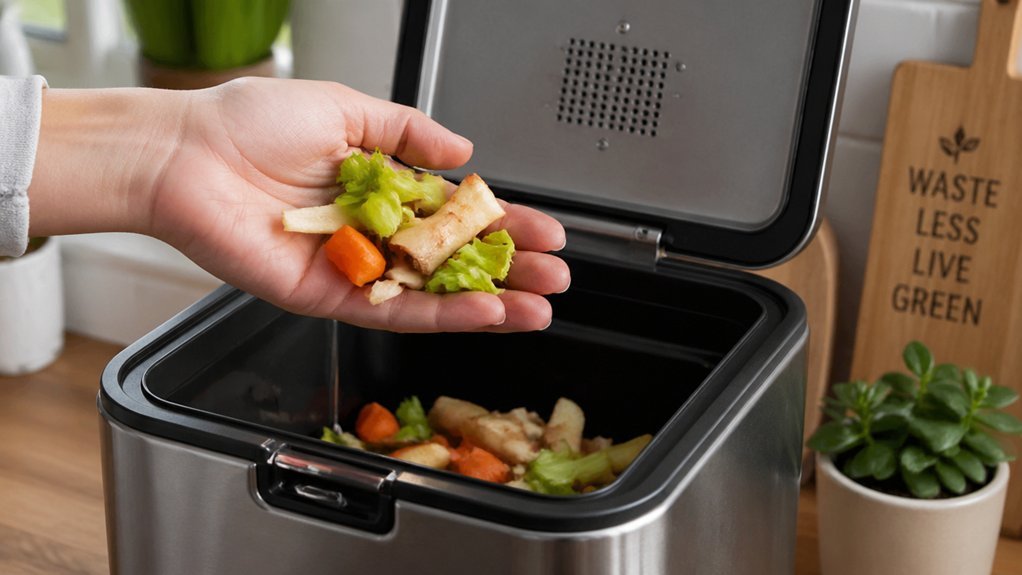
Why not chop your kitchen waste into bite‑size pieces before it hits the composter? You’ll find that pre‑chopping kitchen scraps into uniform size boosts processing efficiency in a countertop composter. Small pieces increase surface area, letting microbes and heat act faster, which shortens the rapid cycle to as little as three to five hours. By breaking down tough peels and skins, you create consistent output and keep the machine humming smoothly. Just remember to avoid bulky items like whole bones or large meat cuts; they jam the system and slow digestion. Stick to evenly cut fragments, and watch your compost transform quickly, efficiently, and without clogs. Microbial activity accelerates odor control and overall breakdown when wastes are evenly sized.
Add Dry Browns and Balance Moisture in a Kitchen Composter
Ever wondered how to keep your kitchen composter odor‑free and fast‑acting? Add dry browns regularly to hit a 2:1 browns‑to‑greens ratio by weight. Toss shredded paper, napkins, or cardboard—carbon material that soaks up excess compost moisture. Sprinkle a handful after each green load, then mix to keep the pile loose for air flow. When the bin feels like a dripping‑wet sponge, add more dry browns; when it’s bone‑dry, a splash of water restores balance. This moisture balance drives rapid decomposition, yields a crumbly end product, and cuts odor.
Shredded paper helps keep the interior of your Bokashi setup clean by acting as an additional liner for moisture and residue control, which can improve the ease of liner removal and reduce clean‑up time in the long run. A 1-4 word phrase
Run Your Kitchen Composter in Off‑Peak Hours to Save Energy
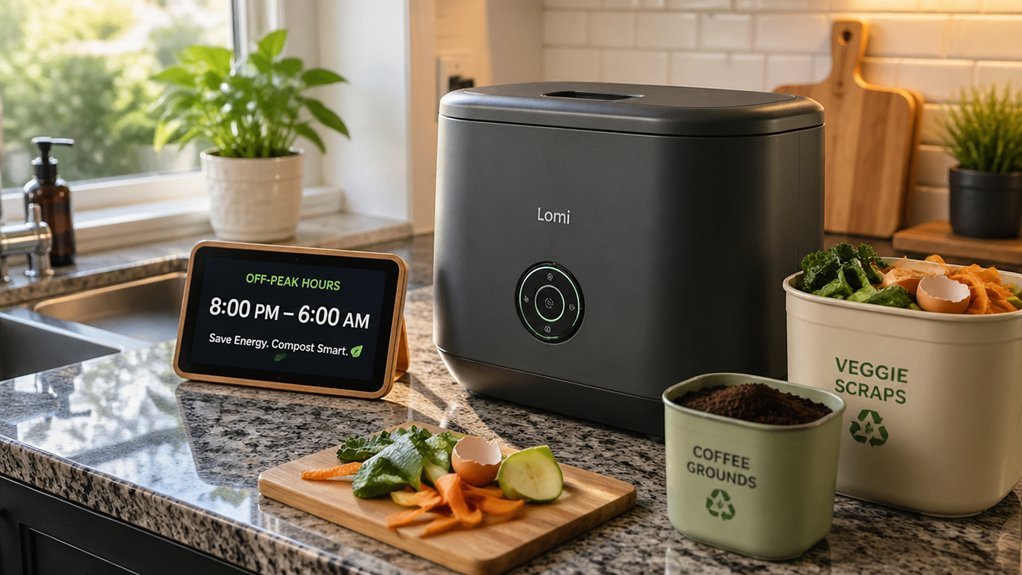
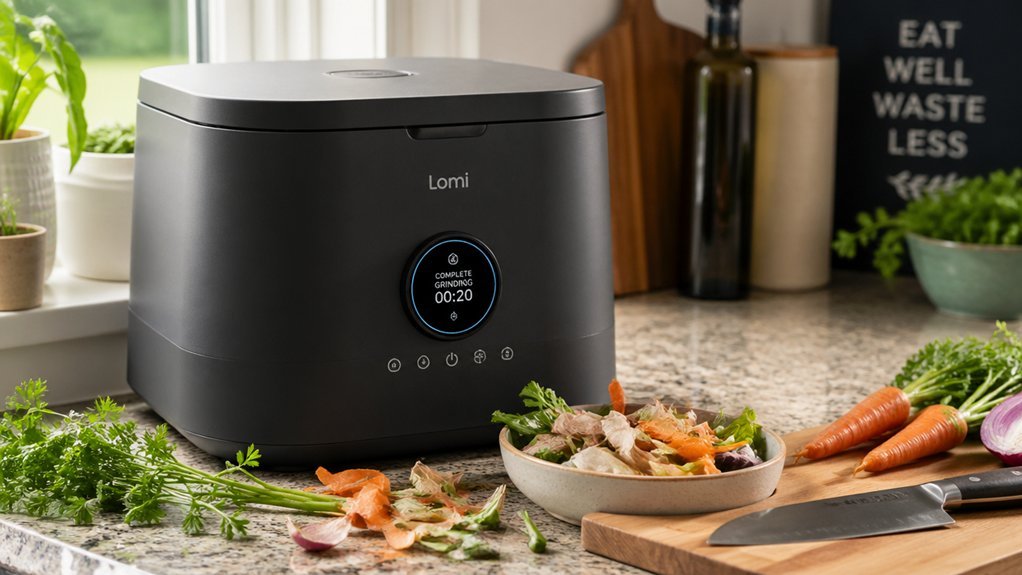
Ever wondered how much you could cut your electricity bill by timing your composter runs? You can boost composting efficiency by running your kitchen composter during off‑peak hours. Schedule the Nagualep cycle—about 3.5 hours—overnight or when time‑of‑use pricing drops. By batching scraps into a single off‑peak run, you cut startup energy and keep electricity rates low. A typical unit draws roughly 1 kWh per cycle, so chaining cycles in off‑peak windows reduces peak‑load stress on the grid. Program the device to start automatically when off‑peak rates begin, and you’ll see noticeable savings while maintaining energy efficiency. This simple shift maximizes power use without altering your daily routine. Off‑peak energy savings
Clean the Filter and Bin Regularly for Consistent Power
When you clean the filter and bin regularly, you keep airflow steady and odor control effective, which lets the composter run at peak power. Regular maintenance also helps preserve the insulation performance of dual-chamber or insulated bins during cold weather temperature regulation. Consistent filter cleaning prevents charcoal from choking the exhaust, so the motor performance stays strong and cycle efficiency stays high. After each composting run, conduct bin cleaning to whisk away kitchen scraps residue, mold, and clumping that could slow dehydration.
Inspect the filter every three to four months and replace it as the manufacturer advises to sustain deodorizing power and odor control. This routine maintenance eliminates blockages, shortens processing times, and keeps the airflow unrestricted, ensuring every cycle runs smoothly and the composter delivers its maximum power output.
Reuse Dehydrated Output to Close the Nutrient Loop
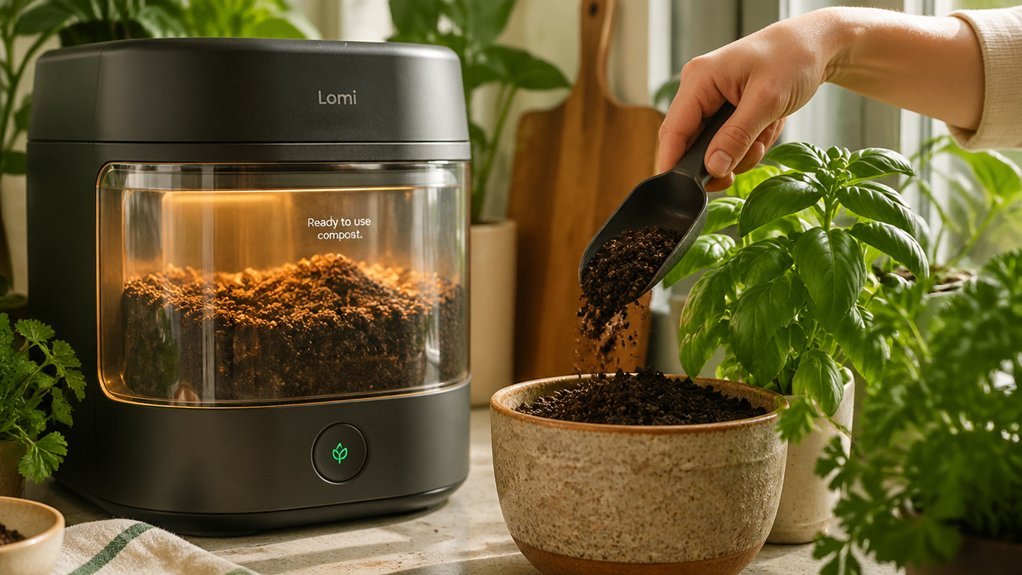
Cleaning the filter and bin keeps airflow steady, so the composter runs at full power and produces a dry, crumbly output you can put to work. You can reuse that dehydrated output to close the nutrient loop by treating it as a soil amendment.
First, spread the powdery or chunky material as mulch incorporation around plants or incorporate it into garden beds; the moisture reduction cuts waste volume by 70‑90 %, aiding waste reduction and greenhouse gas mitigation. Because the output is low in readily available nitrogen, blend it with fresh compost or rich soil to jump‑start compost maturation. If your kitchen composter offers microbial‑assisted output, the microbes will speed nutrient release, turning the dry material into a thriving amendment sooner. This practice maximizes resource efficiency while minimizing emissions enhanced composting speed.
Frequently Asked Questions
What Are Common Composting Mistakes?
You often add meat, dairy, oily or cooked foods, overfill the bin, skip chopping scraps, ignore the greens‑to‑browns balance, forget to turn the pile, and mismanage moisture, all of which stall decomposition.
Do Countertop Composters Really Work?
Yes, countertop composters work, but they only speed up the first breakdown stage. You’ll get a dry, crumbly material quickly, then still need to mature it in soil or a traditional pile for full compost quality.
Can I Put Toilet Paper Rolls in My Compost?
Yes, you can compost plain, unbleached toilet paper rolls; just tear them into small pieces, mix them well with greens and browns, and avoid glossy or heavily inked rolls to prevent contamination.
Which Vegetables Don’t Like Compost?
You’ll find that carrots, beets, lettuce, and other root or leafy crops dislike fresh, unfinished compost because it can burn roots, cause mold, or raise salt levels, so let it mature first.
In Summary
By picking small, even scraps, adding dry browns, and timing your runs for off‑peak hours, you’ll keep your compost lively and energy‑efficient. Regularly cleaning the filter and bin ensures steady power output, while reusing the dehydrated material closes the nutrient loop. Follow these steps, and your kitchen composter will work harder, waste less, and save you money—all without a hitch.